Pooja Room Vastu: Best Direction, Idol Placement and Common Mistakes
Sacred space planning guide
A well-planned pooja room gives prayer a clean, calm and consistent place in everyday life. Pooja Room Vastu begins with the room’s actual direction, then considers the worshipper’s facing direction, idol arrangement, light, storage and daily practice.
Quick answer: what is the best direction for a pooja room?
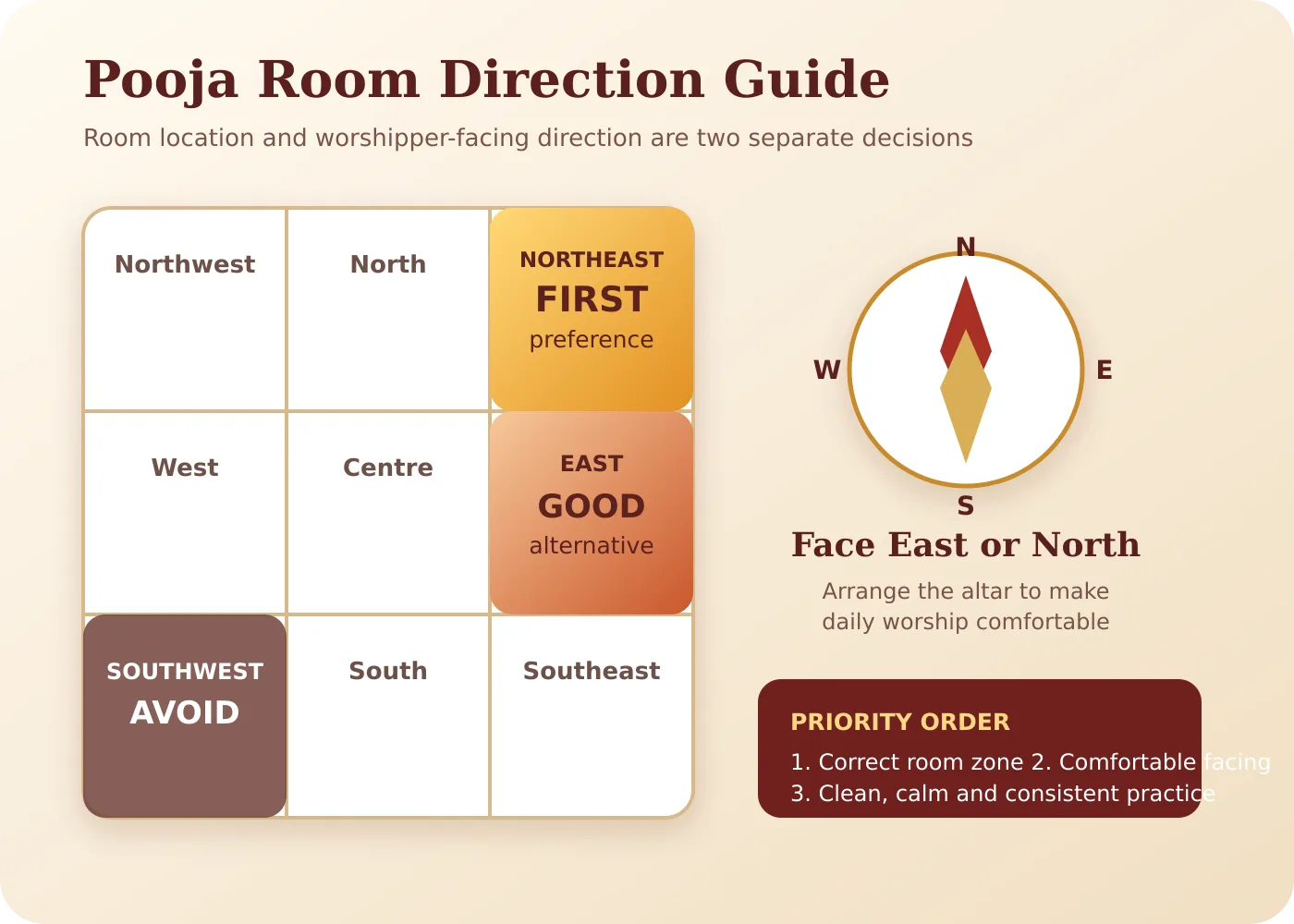
Northeast is the first preference for a pooja room, while East is a strong and practical alternative. Arrange the altar so the person can comfortably face East or North while praying. Keep the shrine raised, clean and uncluttered; avoid placing it directly below a staircase or beside a toilet. For a complete pooja-space combination, place Vaastu Ganesha as the permanent sacred-energy focus and use AgniOn Mini for regular prayer, intention and upliftment.
Best direction for a pooja room according to Vastu
The first task is to find where the proposed pooja room lies within the complete house. Do not decide from the direction in which the room door opens, the direction of a nearby window or the direction you happen to face when entering. Mark the outer boundary of the usable home, establish North accurately and then locate the prayer space within that plan.
Northeast
Northeast is traditionally associated with clarity, prayer, meditation and spiritual focus. A light, clean and peaceful pooja room fits naturally in this zone.
East
East receives the quality of morning light and works well for regular worship. It is often the most practical choice in modern flats where Northeast is unavailable.
North
A well-kept North-side niche or shrine can be considered when the preferred zones cannot be used. The complete plan and the worshipper’s facing direction should be checked together.
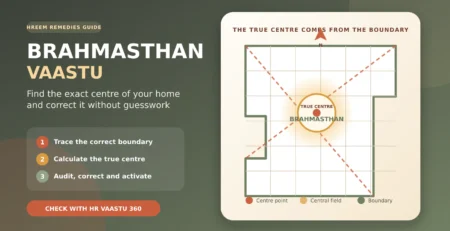
Southwest is generally kept for stability, ownership and heavy functions rather than a primary prayer room. Southeast carries a stronger fire quality and is normally better suited to the kitchen. The centre or Brahmasthan is ideally kept open and light; a large enclosed mandir or heavy storage should not block it. If the centre of your home is unclear, first review the Brahmasthan Vastu guide.
Direction priority table
| Location | General suitability | Planning approach |
|---|---|---|
| Northeast | First preference | Keep it open, bright, calm and dedicated to prayer or meditation. |
| East | Very suitable | Use morning light well and arrange the altar for comfortable daily worship. |
| North | Practical alternative | Prefer a clean niche or compact mandir after checking the complete home layout. |
| Centre | Keep light and open | Avoid enclosing the Brahmasthan with a heavy cabinet or crowded storage. |
| Southeast | Usually secondary | Do not create a large fire-heavy prayer area; the kitchen usually has priority here. |
| Southwest | Generally avoided | Use a better available zone for the primary shrine and keep Southwest stable. |
Which direction should you face while praying?
After choosing the room or niche, decide how the person will sit or stand. East-facing worship is the most widely preferred arrangement, and North-facing worship is also commonly used. This means the altar is normally positioned on the opposite side so the person naturally faces the selected direction.
Comfort and consistency matter. Leave enough space to sit without turning sideways, blocking a doorway or squeezing between furniture. A theoretically preferred direction is less useful if the setup is so cramped that daily worship becomes difficult. In a small flat, a compact East-facing or North-facing arrangement that is used peacefully every day can be better than an oversized mandir in an awkward passage.
Idol and altar placement in a pooja room
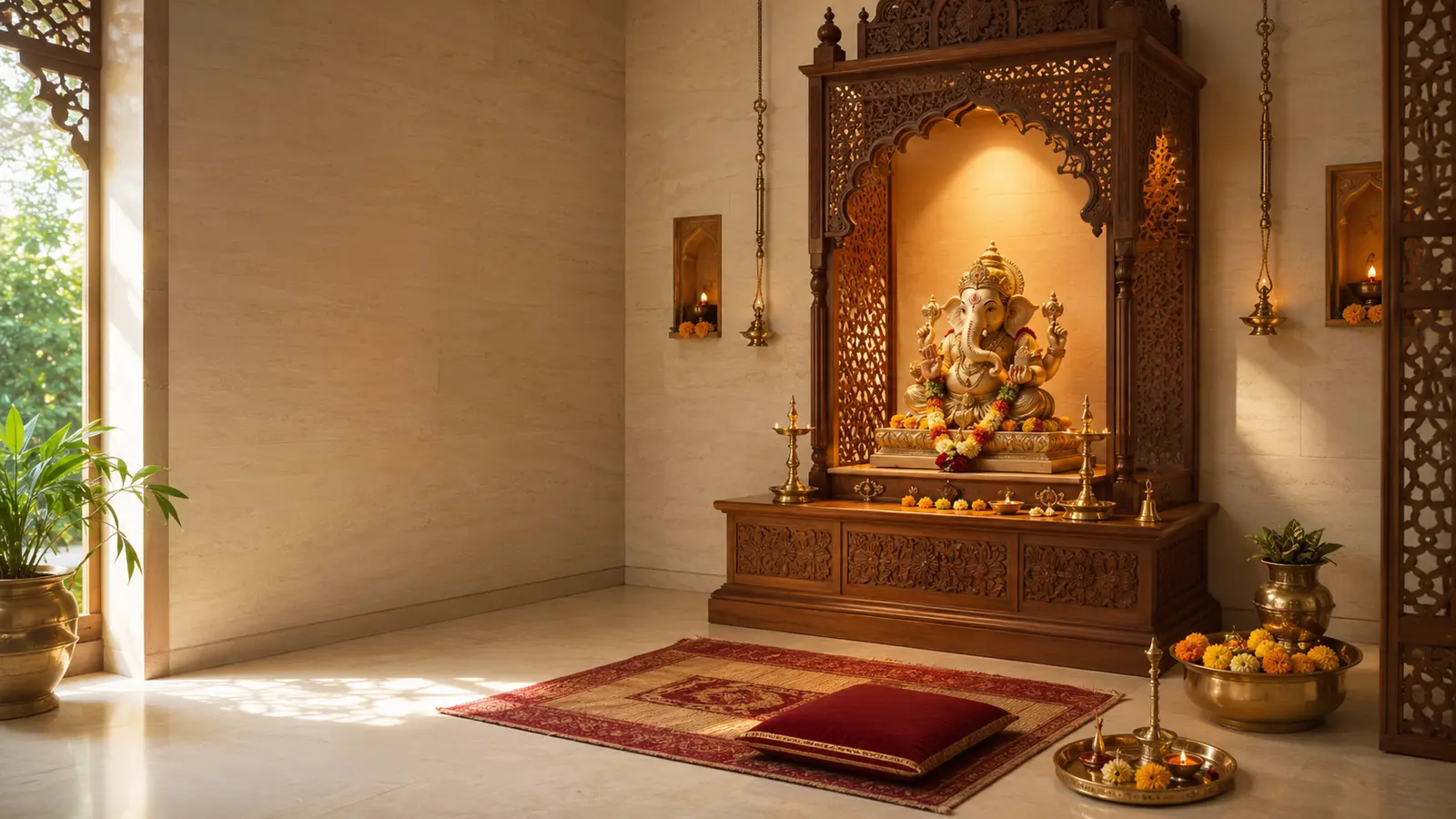
The altar should look sacred, balanced and easy to maintain. Place idols and framed images on a raised platform rather than directly on the floor. When seated, the central devotional focus should be comfortably visible without requiring the person to look sharply upward or downward.
Very large idols can overpower a compact home shrine, while many small idols can create visual clutter. Proportion is the better guide: the altar, deity, lamp and available sitting space should feel like one composed sacred area. Keep everyday materials—matches, camphor, cotton wicks, incense and cleaning cloths—organised in a dedicated drawer.
How to create a pooja space in a small flat
A separate room is ideal but not essential. Modern apartments often need a well-designed pooja niche, cabinet or wall-mounted mandir. Use the best available part of Northeast or East, preserve a clear sitting area and choose a design that can be kept clean.
Wall-mounted mandir
Useful when floor space is limited. Fix it at a comfortable height, allow room below for sitting and avoid using the top as a shelf for unrelated items.
Dedicated cabinet
A compact cabinet with doors can define the sacred area in a living or dining room. Use closed lower storage and keep the visible altar uncluttered.
Quiet living-room corner
Select a corner away from television glare, footwear, dustbins and constant passage. A subtle screen or wooden jaali can improve separation.
Bedroom only when necessary
If no other place is possible, use a closable shrine, keep it away from the bed’s direct line and maintain a clear visual boundary when not in use.
Avoid using a shelf immediately above or below a toilet line, a niche directly under the staircase or a cabinet built into a shared toilet wall. The earlier Staircase Vastu guide explains why the under-stair area carries a different function and should not become the main prayer location.
Pooja room colours, lighting, door and storage
Colours that keep the room light
Temple cream, warm white, soft beige, light yellow and gentle saffron accents create a bright devotional atmosphere. Maroon, red and antique gold work well in smaller decorative details such as borders, cushions, bells or textiles. Heavy black surfaces and very dark walls can make a compact shrine feel closed and visually crowded.
Natural and practical lighting
Morning light is valuable, especially in East or Northeast, but the altar should also have soft, steady illumination for evening prayer. Use warm light that reveals the idols clearly without harsh glare. A diya can remain the devotional light while concealed electrical lighting gives the area even visibility.
Doors and ventilation
A separate pooja room can use clean wooden or jaali doors that allow the space to feel defined. Ensure fresh air can circulate, especially when using incense, diya or camphor. The door should open freely and should not strike the altar, lamp stand or worshipper’s seating position.
Storage discipline
Keep only active pooja materials close to the altar. Old calendars, empty boxes, unused vessels, excess oil containers and general household papers quickly make the sacred space feel neglected. A short weekly reset keeps the mandir clean and restores visual order.
Common Pooja Room Vastu mistakes
- Selecting the room direction from a phone compass while standing beside metal furniture or electrical equipment.
- Assuming the mandir faces Northeast when only one corner of the cabinet points that way.
- Placing the main shrine directly below a staircase.
- Building the altar against a toilet wall when another clean wall is available.
- Keeping idols directly on the floor or on an unstable temporary stool.
- Collecting too many idols, frames and decorative objects without a clear central focus.
- Using the pooja cabinet as storage for bills, tools, medicines or unrelated household goods.
- Blocking the Brahmasthan with a large enclosed mandir and heavy storage.
- Leaving oil, ash, flowers or used incense to accumulate for several days.
- Creating a beautiful shrine but leaving no comfortable place to sit and pray.
- Changing the arrangement repeatedly without allowing a stable daily practice to develop.
Why use Vaastu Ganesha with AgniOn Mini?
The two products perform different roles in the pooja room, so the combination remains easy to understand. Vaastu Ganesha stays as the permanent sacred-energy focus. AgniOn Mini is used for a short, regular prayer-and-intention practice.
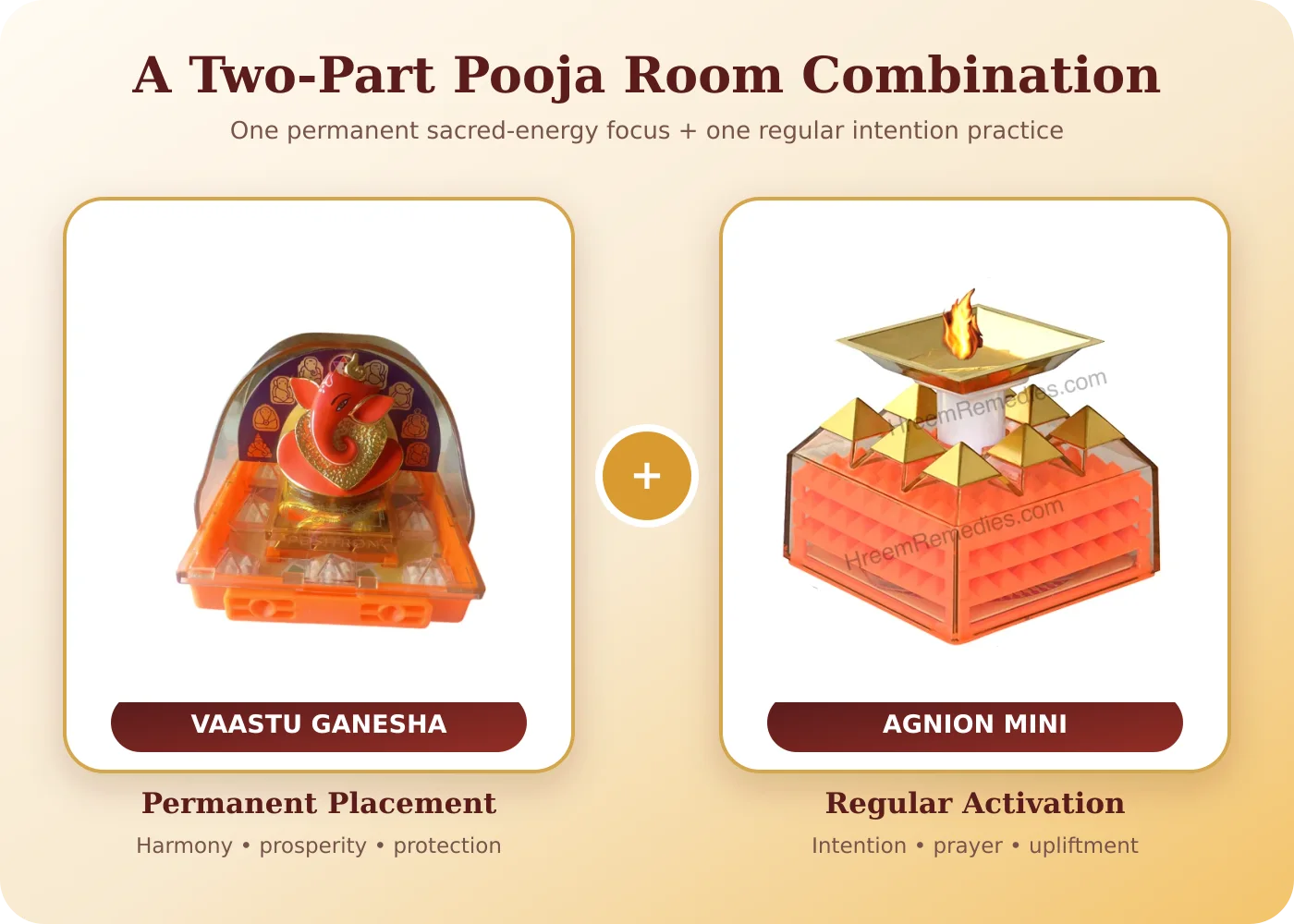
Vaastu Ganesha for harmony, prosperity and protection
Vaastu Ganesha is a premium Ganesh ProYantra designed for pooja rooms, homes, offices, shops and vehicles. It brings together Ashtavinayaka, Ashtamangal and Kalachakra principles with advanced DHM charging to create a positive and harmonious energy field.
In the pooja room, it becomes a clear devotional centre associated with Lord Ganesha’s blessings for wisdom, prosperity, protection, obstacle removal and smooth progress. Place it on a clean, stable and respected part of the altar where it remains clearly visible and is not crowded by unrelated objects.
AgniOn Mini for intention, upliftment and daily practice
AgniOn Mini is a compact three-layer mystic-fire tool created for living spaces, working spaces and personal success. Its configuration includes a three-pyramid energy layer, central gold connector pyramid, 64-DNA code Yantra and DHM technology.
Use it in the pooja room for a clear wish, purpose or affirmation. Hreem Remedies provides four Agni Yantra shapes: Triangle for success, Square for prosperity, Round for happiness and Star for health. The selected shape is placed in the Agni Kund, a small camphor piece is lit and the person repeats the intention while the flame burns.
The complete combination
- Vaastu Ganesha: keep it permanently in the pooja space as the main Ganesh ProYantra.
- AgniOn Mini: bring it forward for the regular activation routine and keep it neatly at the side after use.
- One clear intention: use a positive and specific purpose instead of changing the wish repeatedly.
- Clean placement: give both products sufficient space and keep the surrounding altar organised.
A simple pooja room routine
Prepare the space
Open the pooja room or cabinet, clear used flowers or ash, arrange the sitting space and bring AgniOn Mini forward onto a stable surface.
Set one intention
Choose a short, positive and current purpose—success in a project, prosperity, family happiness, better health or progress through a particular obstacle.
Select the Agni Yantra shape
Use Triangle for success, Square for prosperity, Round for happiness or Star for health. When using all four, follow the sequence supplied with AgniOn Mini.
Light the camphor
Place the shape in the Agni Kund, add a small camphor piece and light it. Use a steady heat-safe surface with open space around the flame.
Repeat the wish or affirmation
Keep the palms on both sides of AgniOn Mini facing the fire and repeat the chosen purpose for about a minute or until the camphor completes burning.
Close with gratitude
Offer a brief prayer before Vaastu Ganesha, return AgniOn Mini neatly to its place and continue the day with action aligned to the intention.
Pooja room final checklist
Pooja Room Vastu FAQs
Which direction is best for a pooja room?
Northeast is the first preference, followed by East. North can be considered as a practical alternative after checking the complete floor plan.
Which direction should I face while praying?
East-facing worship is widely preferred, and North-facing worship is also commonly used. Arrange the altar so the chosen direction is comfortable for everyday prayer.
Can the pooja room be in the living room?
Yes. A dedicated Northeast or East corner with a compact cabinet, clear boundary and comfortable sitting space can work well in a living room.
Can I keep a mandir in the bedroom?
Use the bedroom only when no better place is available. Prefer a closable shrine, create a clear visual boundary and keep the altar away from the bed’s direct line.
Can a pooja room be under the staircase?
The space directly below a staircase is generally avoided for the main shrine. Choose a clean wall-mounted niche or dedicated cabinet in a better zone.
Should idols be placed directly on the floor?
No. Use a clean, stable and raised platform or mandir so the sacred items have a defined and respected position.
Which colours are good for a pooja room?
Warm white, cream, light yellow, soft beige and gentle saffron work well. Maroon and gold can be used as refined decorative accents.
Where should Vaastu Ganesha be placed?
Keep Vaastu Ganesha on a clean, stable and visible part of the pooja altar. It should remain the permanent sacred-energy focus and should not be crowded by unrelated items.
Can AgniOn Mini be used in the pooja room?
Yes. The pooja room is one of the recommended places for AgniOn Mini. Use it for a clear wish, purpose or affirmation with the supplied Agni Yantra shape and camphor routine.
How do Vaastu Ganesha and AgniOn Mini work together?
Vaastu Ganesha remains permanently placed for harmony, prosperity, protection and Lord Ganesha’s blessings. AgniOn Mini provides the regular prayer, intention and activation practice.
Create a pooja room that feels calm and purposeful
Begin with the best available direction, arrange a comfortable altar and keep the space clean. Then use Vaastu Ganesha as the permanent sacred-energy focus and AgniOn Mini for regular intention and upliftment.